Why does my house smell musty even after cleaning
That musty smell after cleaning in Valley Village usually means hidden mold, not dirt. Here is how to find the source and fix it for good.
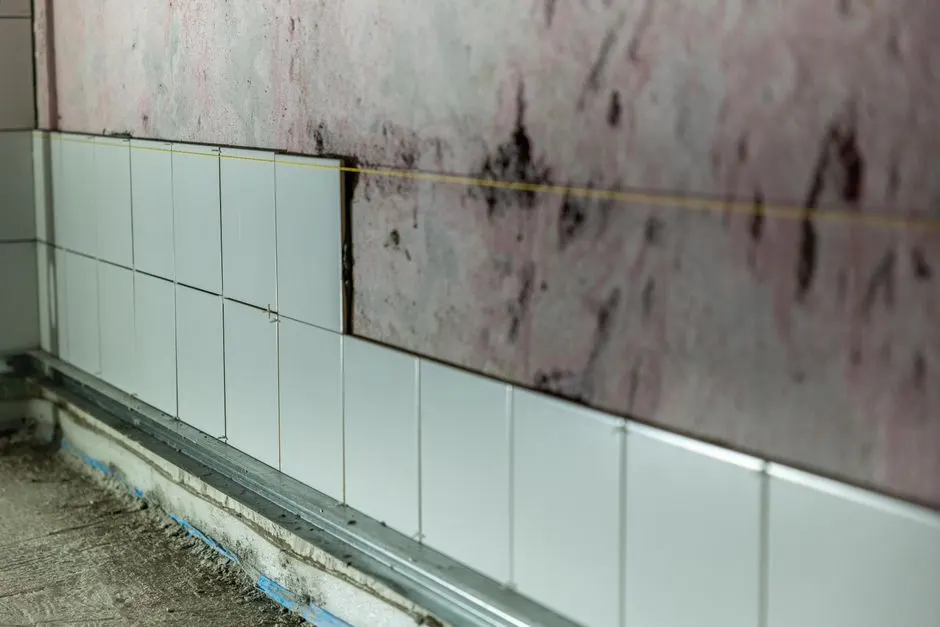
Your house still smells musty after cleaning because the odor is not coming from dirt, dust, or stale air - it is coming from mold growing inside a wall cavity, under flooring, in an HVAC plenum, or in a crawl space where your vacuum and mop never reach. Surface cleaning removes the smell for a day or two, then the colony releases spores again and the odor returns. In Valley Village, California, that pattern almost always points to chronic moisture: a slow supply-line drip, a shower pan that seeps into the subfloor, or condensation on a cold interior wall during our cool, damp mornings.
Below we walk through why the smell keeps coming back, the five places it hides in Valley Village homes, how to trace the source yourself, and when it is time to bring in a mold remediation company. We do this work every week in this neighborhood, so the specifics are local, not generic.
The short answer: you are cleaning the wrong thing
Why does my house smell musty even after cleaning Valley Village California homes? Because the mold colony is behind a surface you cannot see or wipe. Mold needs three things: moisture, organic material (drywall paper, wood framing, carpet backing, dust), and time - usually 24 to 48 hours of sustained dampness. Once it establishes, the colony produces microbial volatile organic compounds (mVOCs) that smell like wet cardboard or a damp basement. Those compounds diffuse through drywall and paint, so the smell reaches your nose even though the mold itself is sealed behind a finished wall.
Cleaning removes the mVOCs sitting on surfaces. It does nothing to the colony producing them. That is why the smell returns within 24 to 72 hours of a thorough clean.
Why does my house still smell musty after cleaning in Valley Village, California?
Valley Village sits in the San Fernando Valley, where summer humidity is low but our winter and early spring bring morning dew points in the 45-55°F range, and interior walls facing north or shaded by mature street trees stay cold enough to condense moisture. Add the housing stock - much of it built between 1948 and 1965, with original galvanized supply lines, cast-iron drains, and slab-on-grade construction - and you get a recipe for slow, invisible leaks that feed mold for months before anyone notices a stain.
Three local patterns we see over and over:
- Slab leaks under original hardwood or tile. A pinhole in a copper or galvanized line under the slab wicks moisture up through the concrete and into the flooring. The surface feels dry. The subfloor is not.
- Shower pan failures in 1950s bathrooms. The original lead or hot-mop pans crack after 60+ years. Water seeps into the framing behind the tile, and the musty odor shows up in the adjacent bedroom closet.
- HVAC condensation in attic air handlers. A clogged primary drain pan overflows into the attic decking every summer. By November, you have mold on the sheathing and a smell that pushes down through ceiling can lights.
If you want a definitive answer rather than a guess, professional mold inspection Valley Village California uses moisture meters, thermal imaging, and air sampling to pinpoint the colony instead of chasing the smell room to room.
The five places musty odor hides in Valley Village homes
Musty odor causes Valley Village California homeowners miss most often are in spaces they never open. Here is where we find it, ranked by frequency in this neighborhood.
1. Inside wall cavities behind kitchen and bathroom plumbing
Any wall with a supply line or drain stack is a candidate. A slow drip at a shutoff valve or a hairline crack in a cast-iron stack keeps the paper facing on drywall damp. The mold grows on the back side of the drywall - the side you never see. The smell leaks through outlets and baseboards.
2. Under flooring: hardwood, laminate, and carpet pad
Carpet pad is the single most common hidden reservoir. Once it gets wet, it stays wet for weeks. Even after the carpet dries on top, the pad and the tack strip underneath stay damp and grow mold. Pull a corner and smell it - if it smells like a wet dog, that is your source.
3. HVAC air handler, ductwork, and drain pan
A musty odor after cleaning HVAC in Valley Village California is almost always the evaporator coil, the drain pan, or the fiberglass duct liner. The system pulls humid air across a cold coil, and any dust on that coil becomes a mold substrate. Every time the fan runs, it distributes spores through the house.
4. Attic sheathing and roof decking
Valley Village roofs take a beating. A single missing shingle or a failed pipe boot lets water in during the first winter rain. The mold grows on the underside of the sheathing, where attic insulation hides it. If your attic smells musty when you poke your head up, that is the source. Our team handles attic mold testing and removal Valley Village California with containment so spores do not migrate into living space.
5. Crawl spaces and under-house areas
Homes with raised foundations - common on the older streets near Valley Village Park - have crawl spaces that stay at 70-80% relative humidity year-round. Without a vapor barrier and ventilation, the wood joists and subfloor grow mold. The smell rises through the floor.
Can mold cause a musty smell without visible growth in Valley Village?
Yes. Visible mold is the exception, not the rule. Mold colonies behind drywall, under flooring, or inside ductwork are often invisible from the living space, yet they produce enough mVOCs to make an entire house smell musty. In our experience, roughly 7 out of 10 musty-odor calls in Valley Village turn up mold that the homeowner never saw before we opened a wall or pulled flooring.
That is why air sampling matters. A air quality and mold testing Valley Village California assessment compares indoor spore counts to an outdoor baseline. If indoor counts are 3x or higher - or if you see a species like Stachybotrys or Chaetomium that is not normally outdoors - you have an active amplification site even if nothing is visible.
How to find the source of a musty smell in Valley Village, California
How to find source of musty smell in Valley Village California without tearing the house apart: work from the strongest smell outward, and use your nose plus a cheap moisture meter. Here is the process we walk homeowners through before we arrive.
- Close the house for 4 hours. Shut windows and doors, turn off the HVAC fan. Smell each room at the doorway. The room with the strongest odor is your starting zone.
- Check the perimeter of that room. Baseboards, outlets, light switches, and any wall shared with a bathroom or kitchen. A musty smell at an outlet almost always means the cavity behind it is wet.
- Use a $30 pin-type moisture meter. Readings above 16% on drywall or wood indicate active moisture. Above 20% is a mold-friendly environment.
- Inspect the HVAC return and supply vents. Remove one grille and look at the duct interior with a flashlight. Black or grey speckling on the metal or liner means the system is contaminated.
- Check the water heater pan and the washing machine hoses. Both are common slow-leak sources that go unnoticed for months.
If you find moisture but no visible mold, you have caught it early. Dry the area within 24-48 hours and you may avoid remediation entirely. If the meter reads high and the smell has been present for weeks, the colony is established and DIY drying will not fix it.
Common mistakes that keep the smell coming back
The mistakes we see most often are the ones that make the problem worse or hide it longer.
- Painting over the smell. Mold-blocking primer seals in mVOCs for a few weeks, then the colony eats through the primer. You have added a layer to remove later.
- Running a plug-in air purifier as the fix. A HEPA unit reduces airborne spores but does nothing to the colony producing them. It is a bandage, not a cure.
- Bleaching visible mold on porous surfaces. Bleach kills surface mold on tile and glass. On drywall, wood, or carpet, it kills the top layer and leaves the roots alive. The mold returns in 2-3 weeks.
- Ignoring the HVAC. If the air handler is contaminated, every remediation you do in the living space gets re-contaminated the first time the fan runs.
- Assuming a musty smell always means mold. Occasionally it is a dead animal in a wall or a failed wax ring on a toilet. A proper inspection rules those out before we quote remediation.
If you want the smell gone for good rather than suppressed, the fix has to address the moisture source, the colony, and the air pathway - in that order.
When to call a professional
Call us when the smell returns within a week of cleaning, when your moisture meter reads above 20% on any wall or floor, when you see discoloration on drywall or ceiling, or when anyone in the house is waking up with congestion, headaches, or a cough that clears when they leave. Those are the signals that the colony is large enough to affect indoor air quality.
Mold Remediation Service Valley Village is a local mold remediation company serving Valley Village, California. We start with a proper inspection - moisture mapping, thermal imaging, and air sampling - so you know exactly what you are dealing with before any work begins. Then we contain the area, remove the affected material, treat the framing, and verify with post-remediation clearance testing. If you are comparing options, our mold remediation company Valley Village California page lays out the full process and what is included.
Frequently Asked Questions
Why does my house smell musty even after cleaning in Valley Village, California?
Because the mold colony is behind a surface you cannot clean - inside a wall cavity, under flooring, in the HVAC, or in the attic. Surface cleaning removes the smell for 24-72 hours, then the colony releases new mVOCs and the odor returns. The fix is finding and removing the moisture source plus the colony.
Can mold cause a musty smell without visible growth in Valley Village?
Yes. Roughly 7 out of 10 musty-odor calls we run in Valley Village turn up mold the homeowner never saw. Mold behind drywall, under carpet pad, or inside ductwork is invisible from the living space but still produces odor compounds. Air sampling confirms it.
How do I get rid of musty smell in my Valley Village California home?
Find the moisture source, dry the area within 24-48 hours, then remove any mold-affected porous material. If the smell has been present for weeks or your moisture meter reads above 20%, call a remediation company. Air purifiers and bleach do not fix an established colony.
Does musty smell always mean mold in Valley Village California?
No. About 1 in 10 musty-smell calls turns out to be a dead animal in a wall, a failed toilet wax ring, or a dry P-trap letting sewer gas in. A proper inspection rules those out before anyone quotes mold remediation.
Who should I call for musty smell in Valley Village California?
Call a licensed mold remediation company that does its own inspection and air sampling. Mold Remediation Service Valley Village handles inspection, remediation, and post-remediation clearance testing in one visit. Call (833) 929-5837 to schedule.
Get help with Mold Remediation Service in Valley Village
If your house still smells musty after cleaning, the source is almost certainly hidden mold - and it will keep coming back until the moisture and the colony are removed. Mold Remediation Service Valley Village handles inspection, remediation, and clearance testing for homes across Valley Village, California.
Call (833) 929-5837 to schedule an inspection. We will tell you what is causing the smell, what it takes to fix it, and what it costs before any work starts.